
In today’s digital age, the importance of ethical design cannot be overstated. With users becoming increasingly aware of the ethical implications of their online interactions, businesses and designers must prioritize ethical practices to build trust and ensure the welfare of their users. This article explores the core principles of ethical design and offers practical guidance on how to apply them effectively.
What is Ethical Design?
Ethical design refers to the practice of creating digital products and services that prioritize the well-being, rights, and dignity of users. It involves considering the broader impact of design choices on society and the environment and making decisions that uphold moral and ethical standards. Ethical design is not just about avoiding harm; it’s about actively doing good and promoting positive values.
The Importance of Design Ethics
Design ethics is crucial for several reasons. First, it builds trust with users. When users know that a company values their privacy and security, they are more likely to engage with its products and services. Trust also enhances the customer lifetime value, and ultimately, the brand value. Second, ethical design can prevent legal and ethical issues in web design, such as hefty fines, litigation costs, reputational issues, data breaches, and discriminatory practices. Finally, ethical design contributes to the overall betterment of society by promoting inclusivity, accessibility, and sustainability.
X Principles of Ethical Design
1. User-Centered Design
The cornerstone of ethical design is a user-centered approach. This means prioritizing the needs, preferences, and experiences of the users above all else. To achieve this:
- Conduct User Research: Gather insights through surveys, interviews, and usability testing to understand your users’ needs.
- Empathy Mapping: Create empathy maps to visualize what users think, feel, and experience.
- Iterative Design: Continuously refine designs based on user feedback.
2. Transparency and plain language
Transparency involves being open and honest about how user data is collected, used, and shared. This builds trust and allows users to make informed decisions.
- Clear Privacy Policies: Draft privacy policies that are easy to understand and readily accessible.
- Consent Mechanisms: Implement clear consent mechanisms for data collection and usage.
- Regular Updates: Keep users informed about any changes to policies or data practices.
Transparency also implies using plain language: a language so clear that users can easily find the information they need, understand it upon first reading and know what to do with the information they find. Since 2023, there is an ISO norm on plain language: ISO 24495-1:2023. And yes, it is totally possible to transform walls of jargon into plain language, including on heavy legal content. That’s part of our daily job!
3. Inclusivity
Inclusivity ensures that products and services are accessible to all users, regardless of their abilities, backgrounds, or circumstances.
- Accessibility Standards: Adhere to accessibility standards such as WCAG (Web Content Accessibility Guidelines).
- Diverse Representation: Design for a diverse user base by considering different cultural contexts and user needs.
- Inclusive Language: Use language that is respectful and inclusive of all users.
4. Privacy and Security
Protecting user privacy and ensuring data security is paramount in ethical design. This involves safeguarding personal information from unauthorized access and breaches.
- Data Minimization: Collect only the data that is necessary for the service.
- Encryption: Use encryption to protect data in transit and at rest.
- Regular Audits: Conduct regular security audits to identify and mitigate vulnerabilities.
5. Sustainability
Sustainable design practices consider the environmental impact of digital products and services.
- Energy Efficiency: Optimize websites and applications for energy efficiency to reduce their carbon footprint.
- Green Hosting: Choose web hosting providers that use renewable energy.
- Long-Term Thinking: Design for longevity to avoid frequent redesigns and updates.
6. Ethical Content
The content on your platform should be ethical, truthful, and free from manipulation.
- Fact-Checking: Ensure all content is accurate and well-researched.
- Avoid Manipulative Design: Steer clear of dark patterns that trick users into taking actions they did not intend.
- Content Warnings: Provide content warnings for potentially harmful or sensitive material.
7. Accountability
Ethical design involves being accountable for your design choices and their impact.
- Feedback Mechanisms: Implement systems for users to report issues and provide feedback.
- Responsiveness: Act promptly to address ethical concerns and user complaints.
- Ethical Audits: Conduct regular ethical audits to assess the impact of your design practices.
8. Community Engagement
Engage with your user community to foster a sense of belonging and mutual respect.
- Open Dialogue: Facilitate open dialogue with users through forums, social media, and other channels.
- User Advocacy: Advocate for the rights and needs of your users in broader industry discussions.
- Collaborative Design: Involve users in the design process through co-design workshops and user testing sessions.
9. Fairness by Design
Fairness by design ensures that digital products and services empower users to make their own, free and informed choices. It implies to provide sufficient information for users to make a real choice, while taking into account their cognitive limitations.
- Provide actual choices: for example, if there is a button to “accept all”, make sure there is an equally salient “reject all” button
- Explain the consequences of choices: for example what happens if you decline to take the “free delivery” in Amazon Prime, whether you can actually purchase without it and, more importantly, what happens if you do accept the “free delivery”: making it really clear that you will pay for an annual subscription at a given price – therefore avoid the word “free” if it really isn’t!
- Provide meaningful controls to users, periodic reminders, easy access to changing their settings or just change their mind
10. Responsibility and Ethics in AI
As AI becomes increasingly integrated into digital products, ensuring ethical AI design is crucial. This involves creating AI systems that are fair, transparent, and accountable.
- Explainable AI: Design AI systems that can explain their decisions in a way that users can understand.
- Bias and Fairness Audits: Regularly audit AI systems for biases and take steps to ensure fairness.
- Human Oversight: Implement human oversight mechanisms to monitor AI decisions and intervene when necessary.
How to Apply Ethical Design Principles
1. Establish a Code of Ethics for Web Designers
Develop a code of ethics for web designers that outlines the values and principles guiding your design practices. This code should be:
- Clear and Concise: Easy to understand and implement.
- Widely Communicated: Shared with all team members and stakeholders.
- Regularly Updated: Revisited and revised as needed to address emerging ethical challenges.
2. Integrate Ethics into the Design Process
Ethics should be integrated into every stage of the design process, from research and ideation to testing and implementation.
- Ethical Design Workshops: Conduct workshops to educate your team about ethical design principles and practices.
- Ethics Checkpoints: Incorporate ethics checkpoints into your project timeline to ensure ethical considerations are addressed at each phase.
- Ethical Impact Assessments: Assess the potential ethical impact of design choices and make adjustments as needed.
3. Collaborate with Stakeholders
Engage with a broad range of stakeholders, including users, clients, and industry experts, to ensure diverse perspectives are considered.
- Stakeholder Interviews: Conduct interviews to gather insights from different stakeholder groups.
- Advisory Panels: Establish advisory panels with representatives from key stakeholder groups to provide guidance on ethical issues.
- Cross-Functional Teams: Form cross-functional teams that bring together designers, developers, marketers, and legal experts to address ethical concerns.
4. Continuous Learning and Improvement
Ethical design is an ongoing process that requires continuous learning and improvement.
- Training and Development: Provide ongoing training and development opportunities for your team to stay informed about the latest ethical design practices.
- Industry Engagement: Participate in industry events and discussions to stay current on emerging ethical issues and trends.
- Reflective Practice: Encourage reflective practice, where designers regularly assess their work and identify areas for improvement.
5. Measure and Evaluate Ethical Impact
Regularly measure and evaluate the ethical impact of your design practices to ensure they align with your values and goals.
- User Feedback: Collect and analyze user feedback to identify ethical issues and areas for improvement.
- Impact Metrics: Develop metrics to assess the ethical impact of your design choices, such as user trust and satisfaction.
- Ethical Reporting: Report on your ethical performance and progress to stakeholders to demonstrate accountability and transparency.
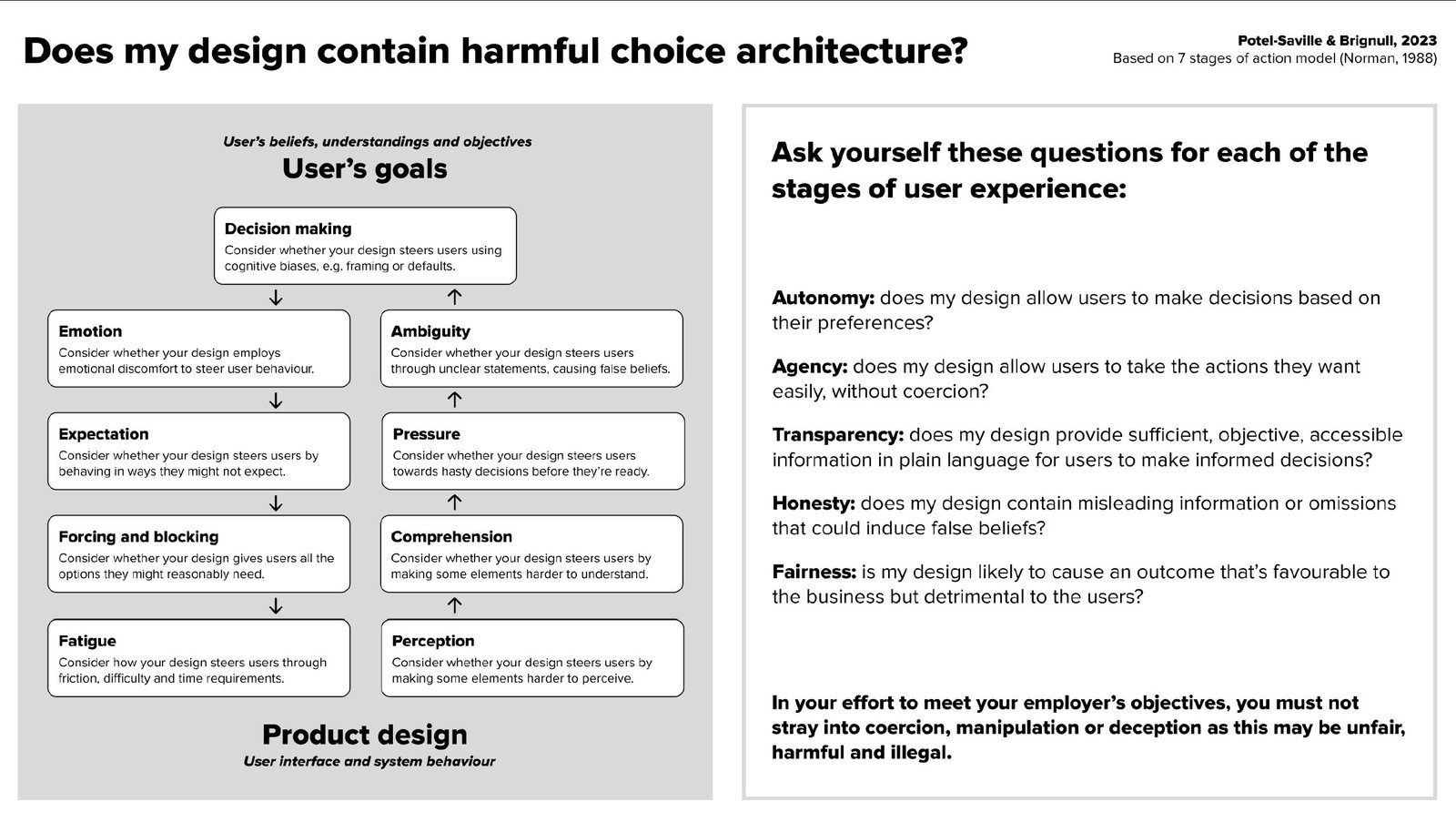
To help the design community, we’ve collaborated with Harry Brignull to create a simple framework for designers to check whether their designs contain any dark patterns. This framework is based on the 7 stages of action by Don Norman, and contains a series of 5 questions on autonomy, agency, transparency, honesty, and fairness:
Conclusion
Ethical design is not just a trend; it’s a necessity in today’s digital landscape. By adhering to the principles of ethical design and integrating them into your design practices, you can create products and services that are not only effective and user-friendly but also morally sound and socially responsible. At Fair Patterns, we are committed to promoting ethical design and helping our clients navigate the complex landscape of ethics in web design. By prioritizing user welfare, transparency, inclusivity, privacy, sustainability, ethical content, accountability, community engagement, fairness by design, and responsibility in AI, we can build a digital world that benefits everyone.
Remember, ethical design is a journey, not a destination. It requires ongoing commitment, reflection, and adaptation. By fostering a culture of ethics and continuously striving for improvement, we can make a positive impact on the digital experiences of users around the world.