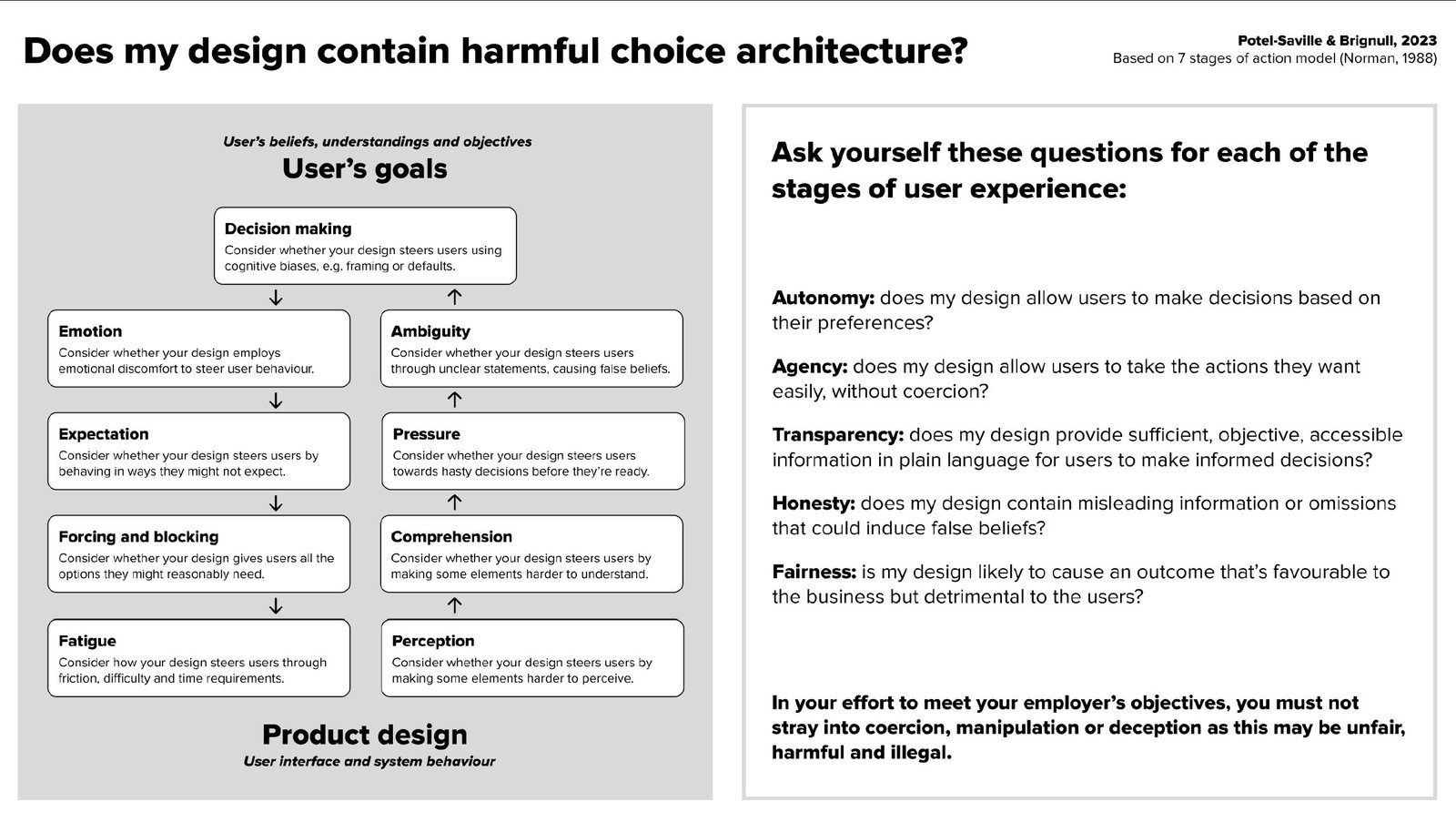
Ethical Design: X principles and how to apply them
In today’s digital age, the importance of ethical design cannot be overstated. With users becoming increasingly aware of the ethical implications of their online interactions,

In today’s digital age, the importance of ethical design cannot be overstated. With users becoming increasingly aware of the ethical implications of their online interactions,

Dans cet épisode du podcast UX Content Craft, Apolline Rouzé* (animatrice du podcast), Senior UX writer et co-fondatrice de Lorem UX writing, échange avec Marie Potel-Saville, fondatrice d’Amurabi et de Fairpatterns.

In the realm of digital interfaces, user experience (UX) and user interface (UI) design are paramount. They determine how users interact with products and services, influencing satisfaction, usability, and ultimately, success. Understanding the basic principles of UX and UI design is crucial for creating intuitive, effective, and engaging digital experiences. This article delves into the core principles of UX and UI design, drawing insights from our Head of Design, Guillemette de Brabant.
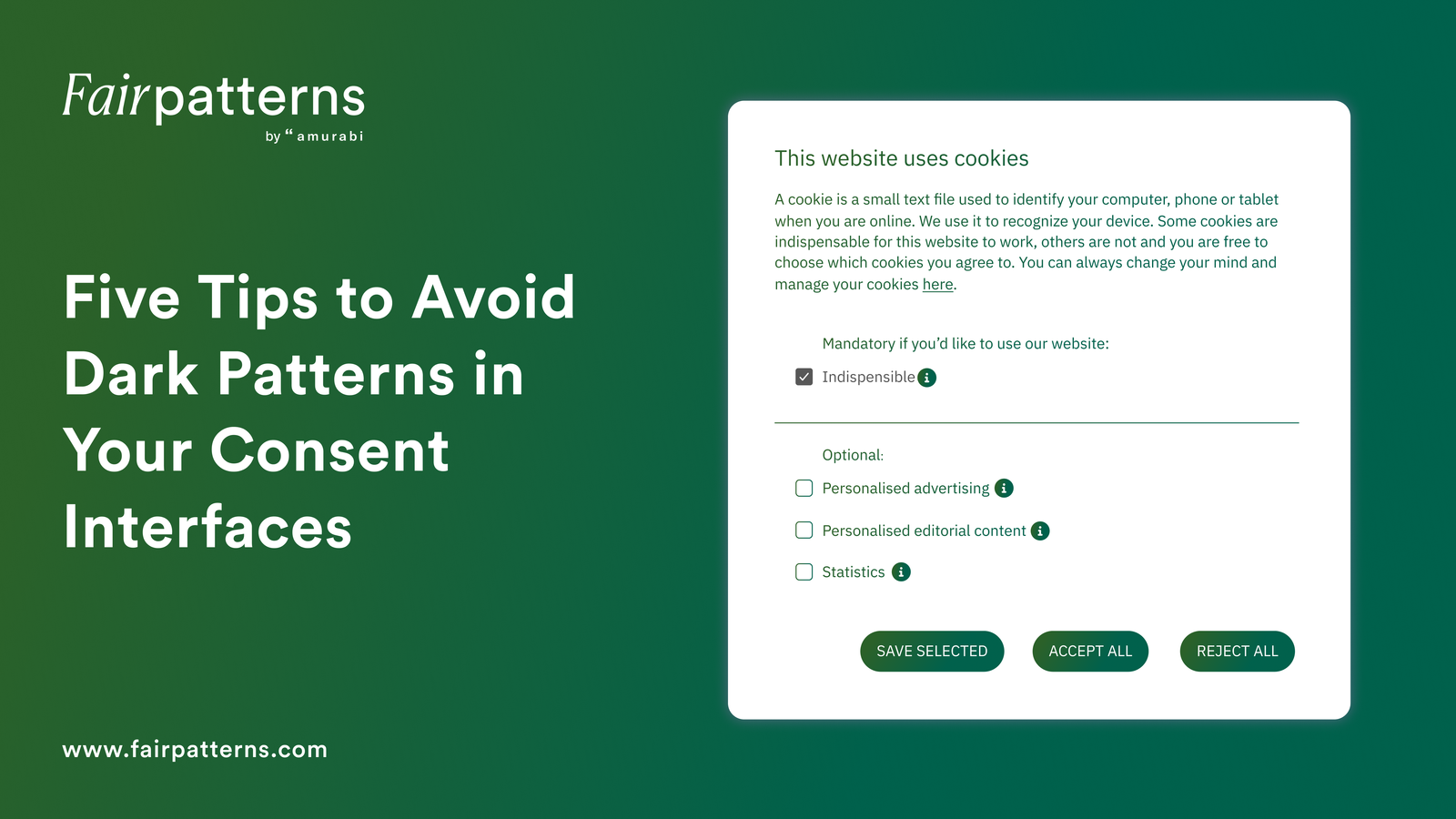
As a digital marketer, legal director, or head of UX, you know that user consent for data collection is crucial. However, the design of consent interfaces can impact user trust and regulatory compliance. Dark patterns—deceptive design tactics—can invalidate consent, harm your brand, and incur fines. At FairPatterns, we advocate for fairness by design to ensure transparency and trust. Here are five tips to avoid dark patterns in your consent interfaces.
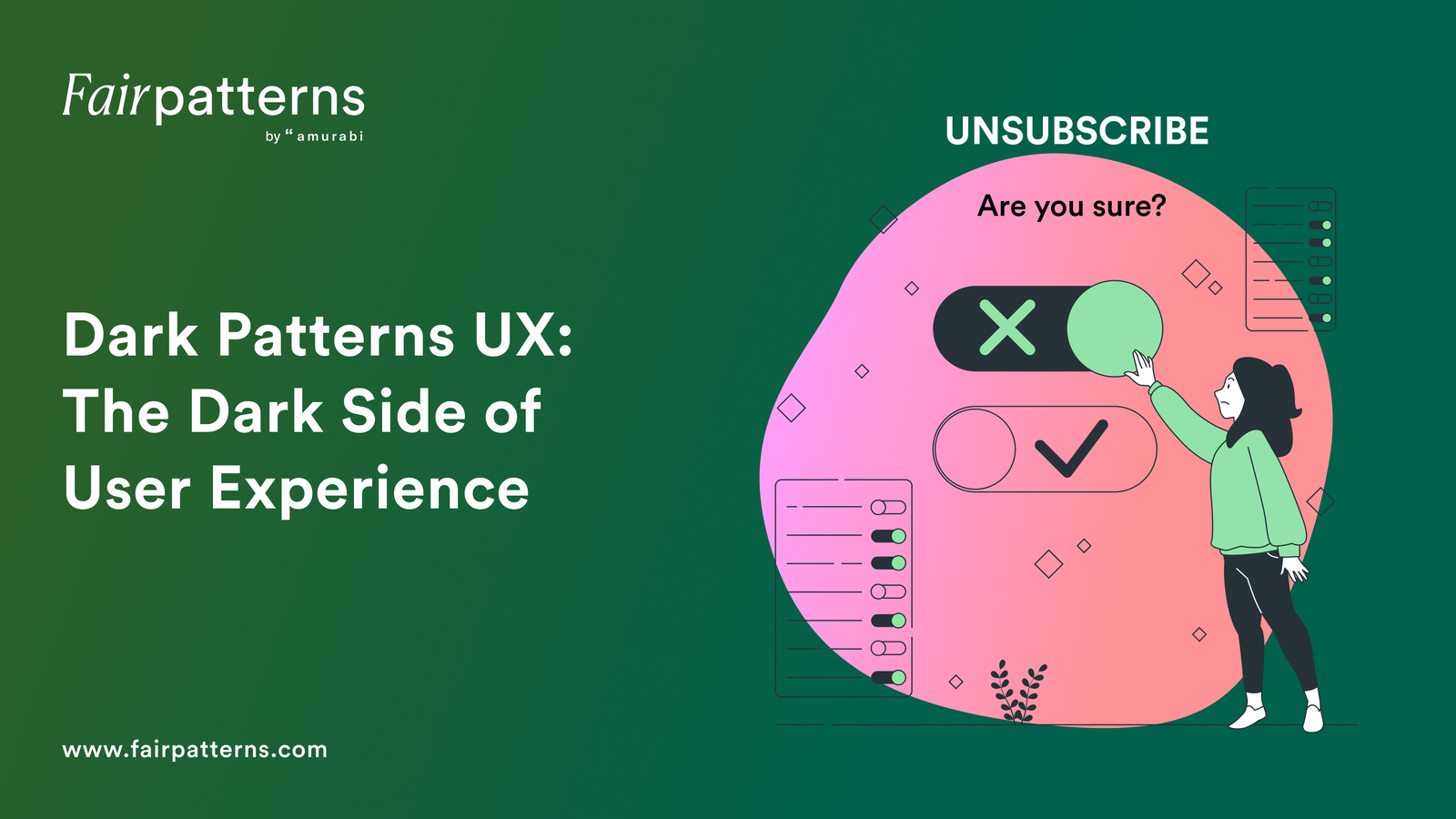
In the digital world, “user experience” (UX) can sometimes involve dark patterns—designs that manipulate users into unwanted actions, causing frustration, loss of trust, and financial or health impacts.
In today’s rapidly evolving digital landscape, the intersection of law and technology presents both challenges and opportunities for innovation. One notable trend gaining traction within
In the world of web design, there’s a shadowy side known as dark patterns. These deceptive tactics manipulate user choices, exploiting cognitive biases. From subtle nudges to hidden traps, they ensnare unwitting users. But awareness leads to fair patterns — guiding lights in the digital realm.
We’re thrilled to announce that our founder, Marie, has just been selected to be part of the European Data Protection Board’s Support Pool of Experts
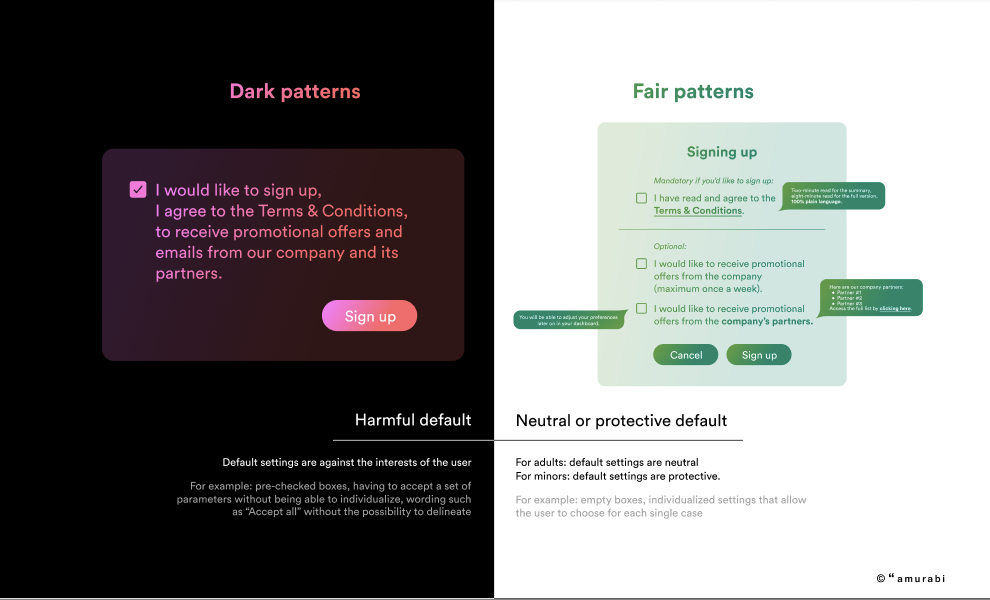
What is a “dark pattern” or deceptive design? This term was coined in 2010 by Harry Brignull, UX designer and PhD in cognitive sciences, to

Fair Patterns: the platform that helps the world getting rid of dark patterns Dark patterns, interfaces which deprive users of their autonomy by deceiving or