Publications

Explore articles, jobs, talks, news, privacy,...

Learn about dark patterns, fair patterns and much more

Willing to dig further on dark patterns? Here are curated resources, including hundreds of publications we analyzed in our R&D Lab, conferences, webinars and job opportunities to fight dark patterns.

Purohit, Aditya & Bergram Kristoffer, et al. (2023)

Doomsurfing, doomscrolling or zombie scrolling. These new additions to the tech vocabulary have become part of everyday routine, scrolling endlessly through social media feeds. Furthermore, some users report a sense of compulsion, a decrease in mental wellbeing and an increased sense of distraction. A common complaint among users harks back to the Facebook newsfeed. In a field experiment with real Facebook users (n= 138), the authors investigate the difference between a strict newsfeed diet (where the newsfeed is automatically reduced to a minimum) and self-regulated newsfeed diet (where the newsfeed is reduced, but users can then manage its content). The results indicate that both of these newsfeed diets are effective at reducing the time spent on Facebook’s platform (-64% for the strict diet, -39% for the self-regulated diet). Their findings also suggest that these design interventions come with positive and negative user experiences such as increased self-awareness and fear of missing out (FOMO).


Radesky, Jenny, et al. (2022)

In this cross-sectional study of apps used by 160 children aged 3 to 5years, the majority were associated with manipulative design features that included parasocial relationship pressure, fabricated time pressure, navigation constraints, and use of attractive lures to encourage longer gameplay or more purchases, in addition to advertisement-based pressure; only 20% of apps had no manipulative design features. Also, children from lower socioeconomic strata played apps with more manipulative design. These results suggest that interactive designs that serve the interests of technology companies over the interests of children are common and deserve further study and regulation.

Truong, Hellen & Dalbard, Axel (2022)

The work aimed to explore the ethical dilemma in design that User Experience (UX) designers encounter in their workplace: consumers’ perception of ethics in bright patterns and dark patterns, and consumers’ decisions between bright patterns and dark patterns. Among others, the findings show that: authority to decide how designers should address ethics in design is more distributed to those investing in a product development project and most ethical issues revolve around challenges of working in an ethical manner rather than bad practices of incorporating ethics in design.

United Kingdom Competition and Markets Authority (2019)

It is apparent that consumers value their privacy and enjoy having control over how their data are used in personalised advertising. However, recent studies show that users are less open to the idea of offering personal information in exchange for such advertisements which are more relevant to their tastes. This work is valuable because it sets out in more detail concerns about platforms’ choice architecture, considers how choice architecture can affect consumers’ engagement and decision making, among others.

Waldman, Ari Ezra (2020)

Waldman considers the argument of researchers that users trade privacy for convenience, highlighting that this stance ignores important cognitive biases and design tactics used by platforms to manipulate users into disclosing information. This essay highlights some of those cognitive biases – from hyperbolic discounting to the problem of overchoice – and discusses the ways in which platform design can manipulate disclosure. It then explains how current law allows this manipulative and anti-consumer behavior to continue and proposes a new approach to rein in the phenomenon.

IAPP

This event is scheduled to hold on the 4th and 5th of April, 2023

This highly anticipated, four-day event attracts professionals from all over the globe to connect and learn about the latest developments in privacy and data protection. Its conference, scheduled to hold on the 4th and 5th of April, will involve a roundtable featuring Marie Potel-Saville, founder and CEO of Amurabi, who will be discussing dark patterns, how to spot them, and how to switch to fair patterns.

CPDP2023 (Organised by SnT, University of Luxembourg)

This event is scheduled to hold on the 26th of May, 2023 by 11:45 a.m.

This interactive workshop will recap the main takeaways of the CPDP23 panels about online deception and map out the next actions needed to undertake as a community to fight dark patterns. It will consider: • How might we capitalise on the existing knowledge about dark patterns? • What are the best ways to strategise and coordinate the upcoming actions of the community? • Which solutions against dark patterns exist and which ones should be created? • What is one common goal that can be achieved in 2023?

Luiza Jarovsky

This event was held on the 23rd of February, 2023 on LinkedIn Live.

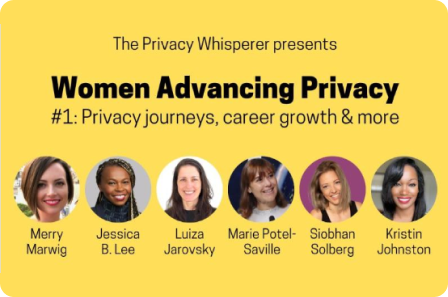
In this unique one-hour session of the first panel of the Women Advancing Privacy event, Luiza Jarovsky, Merry Marwig, Jessica Lee, Marie Potel-Saville, Siobhan Solberg, and Kristin Johnston discussed their privacy journeys, tips for growing in the privacy career and various privacy-related topics. Timestamps are provided to help you navigate: 00:00 - Luiza Jarovsky: current challenges being faced by privacy professionals and pursuing an academic degree in privacy 08:03 - Merry Marwig: privacy harms and her motivations as a privacy professional 20:11 - Jessica Lee: being a successful privacy lawyer and growing in the privacy career 32:06 - Marie Potel-Saville: dark patterns and fair patterns 43:48 - Siobhan Solberg: why privacy and marketing should work together 53:16 - Kristin Johnston: creating a successful privacy culture in your company.

Privacy Commissioner, New Zealand

This event is scheduled to hold virtually on the 10th of May, 2023 11:00 AM (GMT +12)

Ever wonder where the privacy settings are on Facebook? How often do you mindlessly agree to cookie consent pop ups without thinking? Are you bamboozled by opt in/out questions? These deceptive tricks are known as “dark patterns”: interface design techniques that aim to trick or mislead Internet users. In this talk, guest Dr. Alex Beattie reveals the degree of the presence of dark patterns across the New Zealand Internet. He demonstrates how dark patterns cluster around online financial transactions and discusses how these tricks actively undermine user privacy. He will show how dark patterns are deployed as mechanisms to drive business revenue, facilitate customer surveillance, and reduce business operations costs. The talk will conclude with a sneak peek about his future research into the efficacy of dark patterns.

SafeInternet.at, AK Burgenland

The event is scheduled to hold virtually on October 3, 2023 from 6:30 p.m. - 8:00 p.m

Dark patterns are used on the Internet to lure us into actions that are not in our interest - e.g. spending more money or sharing more data than we actually want. This webinar explains how dark patterns manipulate us and how you can protect yourself from them. The topic of "Dark Patterns" will be examined using current studies: participants will learn which psychological tricks and tendencies are used to manipulate consumers and how they can protect themselves from them.

Our clients