Publications

Explore articles, jobs, talks, news, privacy,...

Learn about dark patterns, fair patterns and much more

Willing to dig further on dark patterns? Here are curated resources, including hundreds of publications we analyzed in our R&D Lab, conferences, webinars and job opportunities to fight dark patterns.

Thomas Mildner, Albert Injoom, Rainer Malaka and Jasmin Niess

In the realm of Human-Computer Interaction (HCI), recent years have seen a growing focus on dark patterns within digital interfaces. Despite the emergence of typologies categorizing these deceitful design strategies, a deeper understanding of their psychological foundations has remained elusive. Through collaborative efforts with experts in psychology and dark pattern scholarship, a "Relationship Model of Cognitive Biases and Dark Patterns" has been developed. This model illuminates the intricate interplay between cognitive biases and deceptive design, pinpointing opportunities for ethical interventions. This research underscores the pivotal role of ethical considerations in HCI, advocating for user-centric design practices that prioritize user well-being.

Mario Arias-Oliva, Jorge Pelegrín-Borondo, Kiyoshi Murata, Ana María Lara Palma and Manuel Ollé Sesé

In the realm of digital marketing, the rise of virtual influencers poses ethical challenges akin to dark patterns. These digitally crafted personas wield significant influence over consumer behavior, blurring the line between genuine endorsement and manipulative tactics. To address this, brands must prioritize transparency and honesty when engaging with virtual influencers, countering the impact of dark patterns and fostering trust in the digital landscape.
The Reserve Bank of India (RBI) has introduced draft guidelines for Lending Service Providers (LSPs), web-aggregators of loan products. The guidelines aim to promote transparency and consumer protection, requiring LSPs to digitally display all loan offers, maintain a consistent approach to determining lenders' willingness to offer loans, provide a Key Facts Statement for each lender, and ensure unbiased content display without using dark patterns. Feedback on the draft guidelines is invited until May 31, 2024.

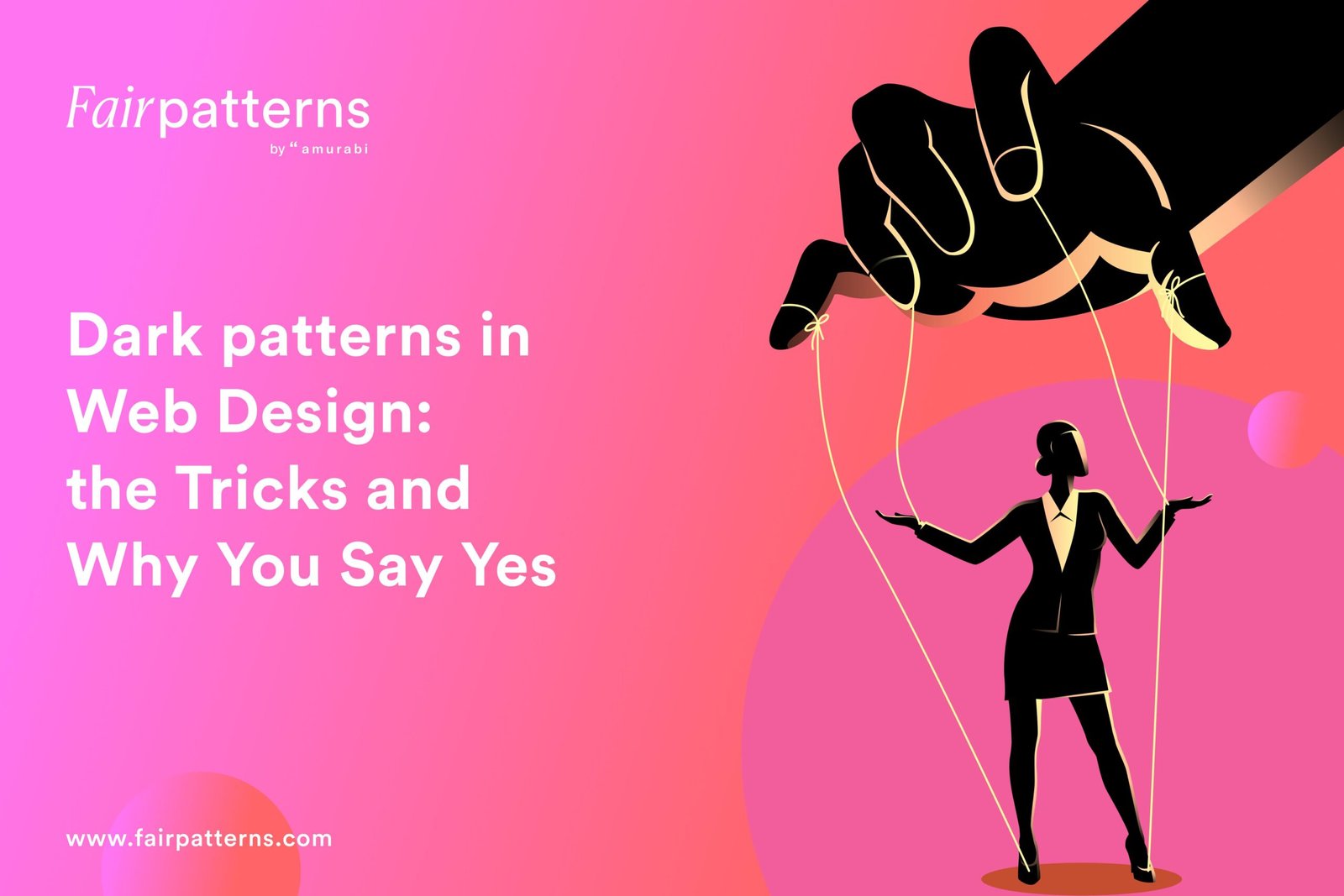
Dark Patterns in Web Design: the Tricks and Why You Say Yes

In the world of web design, there's a shadowy side known as dark patterns. These deceptive tactics manipulate user choices, exploiting cognitive biases. From subtle nudges to hidden traps, they ensnare unwitting users. But awareness leads to fair patterns — guiding lights in the digital realm.

Häuselmann, A.N.

This dissertation examines the societal implications of AI through examples such as emotion recognition and thought-based typing. It questions the efficacy of the EU's privacy and data protection rights in the face of advancing AI technologies. Rather than advocating for a new legal framework, the study suggests adjusting existing provisions based on the diverse disciplines within AI and the nature of legal challenges encountered. Proposed mechanisms include rebuttable presumptions and reversal of proof to enhance legislation effectiveness. Additionally, technical advancements addressing reasoning deficiencies in AI systems are deemed essential for ensuring compliance with regulatory standards.


Leah Zhang-Kennedy, Maxwell Keleher and Michaela Valiquette

Through semi-structured interviews with 23 design practitioners, this study investigates perceptions regarding the use of "privacy dark patterns." It explores designers' sense of responsibility towards user privacy and their interpretations of peers' design choices. One key finding is the normalization of common privacy interfaces, deemed reasonable by some participants. The study identifies factors influencing privacy design practices, including adherence to conventions, legal compliance, usability standards, perceived benefits, and considerations of privacy harm. These insights shed light on the multifaceted dynamics shaping designers' decisions in privacy design.

Janis Witte

This paper explores user manipulation within information systems research, particularly focusing on manipulative techniques like dark patterns. It emphasizes the need for clarity in understanding these methods and their associated phenomena. Proposing a framework consisting of three dimensions—restriction of autonomy, bad information quality, and the feeling of being tricked—it aims to categorize perceived user manipulation's consequences. The paper suggests that different manipulation types lead to distinct outcomes, influenced by factors like the source, changeability, reason, and timing of perception. Through research propositions, it seeks to contribute to a more comprehensive understanding of user manipulation in digital contexts.

Cristiana Santos, Johanna Gunawan, Colin Gray, and Nataliia Bielova

In examining the investigatory and evidentiary methods utilized by courts and scholars regarding dark patterns, a notable contrast emerges. Courts, driven by legal precedent and tangible evidence, focus on retrospective analysis to enforce regulatory measures. Conversely, scholars in computer science employ empirical studies and theoretical frameworks to understand underlying mechanisms and vulnerabilities. Bridging these disciplines requires a nuanced understanding of methodologies and objectives, facilitating collaborative efforts to combat manipulative design practices online. Such interdisciplinary collaboration holds promise for enhancing detection, prevention, and enforcement strategies, ultimately fostering a more ethical digital landscape prioritizing user autonomy and welfare.
On April 25, 2024, the Federal Trade Commission (FTC) took action against bill payment company Doxo, CEO Steve Shivers, and Vice President Roger Parks. The FTC alleges that Doxo used misleading search ads to impersonate consumers’ billers, used dark patterns to hide additional fees on consumers' bills, and signed consumers up for its recurring subscription program without clear consent, violating several Acts.

Maria Sameen and Awais Rashid

Dark patterns, deceptive design strategies intended to manipulate user behavior, have attracted considerable scholarly attention, primarily within non-video game-based platforms. However, there exists a notable dearth of research focusing on the prevalence and implications of dark patterns within video games. Addressing this gap, the present study undertakes a manual analysis of 500 video game reviews to discern the categories of dark patterns integrated into gaming experiences. The objective is to scrutinize the impact of these dark patterns on player privacy and identify avenues for future research to confront pertinent gaps and challenges within this evolving domain.

Our clients